ADWG Explained: What the Guidelines Actually Require

The ADWG sets the benchmark, but they're guidelines, not enforceable standards. Here's what that means for you.
If you've ever looked into how drinking water is regulated in Australia, you've probably come across something called the ADWG.
Most people assume these are strict rules that water utilities must legally follow.
They're not.
The Australian Drinking Water Guidelines (ADWG) are the national benchmark for safe drinking water, but they are guidelines — not enforceable laws. Understanding what that means helps you better interpret water quality reports, understand how water utilities operate, and know where responsibility actually sits in Australia's drinking water safety framework.
Before we break down what the guidelines require, it helps to understand who created them and why they matter.
Who Sets the ADWG?
The Australian Drinking Water Guidelines are developed by the National Health and Medical Research Council (NHMRC) in collaboration with:
- State and territory health departments
- Water regulators
- Water utilities
- Scientific and public health experts
Their role is to compile the best available scientific evidence on drinking water safety and translate it into practical guidance for water providers across Australia.
The ADWG outlines:
- Potential contaminants that can appear in drinking water
- Recommended safe concentration levels
- Monitoring and testing practices
- Risk management strategies
- Treatment and distribution recommendations
Think of the ADWG as Australia's scientific playbook for safe drinking water. It forms the foundation for how drinking water is managed across the country.

Why the ADWG Exists
The primary goal of the guidelines is straightforward:
Protect public health.
The ADWG is designed to ensure drinking water is:
- Safe to drink
- Free from harmful microorganisms
- Within safe chemical limits
- Acceptable in taste, smell, and appearance
Rather than relying only on testing finished water, the guidelines promote a preventative approach to managing risk throughout the entire water supply system. This is known as the multiple barrier approach.
The ADWG recognises that no single treatment step can guarantee water safety. Instead, drinking water systems are designed with multiple layers of protection.
The Multiple Barrier Approach
These barriers generally include:
1. Protected Catchments
Managing land use and environmental conditions where water is sourced.
2. Water Treatment Processes
Filtration, disinfection, and contaminant removal at treatment plants.
3. Monitoring and Laboratory Testing
Ongoing analysis of microbiological and chemical parameters.
4. Distribution System Management
Maintaining pipes, reservoirs, and infrastructure.
5. Operational Oversight
Risk management plans and trained system operators.
Together, these layers form a system-wide safety framework designed to protect drinking water long before it reaches your tap.

What the Guidelines Actually Set
The ADWG provides health-based guideline values for a wide range of substances that may occur in drinking water. These parameters fall into three broad categories.
Microbiological Parameters
Microorganisms represent the highest immediate health risk in drinking water. Examples include:
- Escherichia coli (E. coli)
- Cryptosporidium
- Giardia
The ADWG aims to ensure these organisms are not present in treated drinking water supplies, which is why disinfection processes and monitoring programs are critical components of water treatment systems.
Chemical Parameters
The guidelines also establish recommended limits for chemicals that may occur naturally in source water or enter through environmental or human activity. Examples include:
- Lead
- Arsenic
- Nitrate
- Fluoride
- Disinfection by-products
These limits are based on long-term health exposure research and are designed to protect consumers over a lifetime of drinking water consumption.
Aesthetic Parameters
Not every guideline value relates to health. Some address taste, smell, or visual appearance. Examples include:
- Iron
- Manganese
- Chlorine taste
- Turbidity (cloudiness)
These parameters help ensure drinking water remains pleasant to drink, even when the levels present do not pose a health risk.
Are the ADWG Legally Enforceable?
This is where many people misunderstand how water regulation works in Australia
The ADWG itself is not legislation.
Instead, it acts as a national scientific benchmark that regulators and water utilities use to guide drinking water management. Actual legal oversight occurs through:
- State and territory public health legislation
- Water supply regulations
- Drinking water management frameworks
- Regulatory oversight by health departments
Most jurisdictions incorporate ADWG principles into their regulatory systems, but technically the guidelines themselves are not enforceable laws.
Why Guidelines Still Carry Significant Weight
Even though they are not legislation, the ADWG is highly influential within the water industry. Water utilities use the guidelines to:
- Design treatment infrastructure
- Establish monitoring programs
- Set operational targets
- Evaluate water quality results
- Develop risk management systems
Regulators also review water providers against ADWG-based frameworks when assessing drinking water safety. In practice, this means the guidelines function as the national industry standard for drinking water management.
How Water Utilities Apply the Guidelines
Utilities do not simply test water against guideline numbers. Instead, they implement comprehensive Drinking Water Quality Management Plans (DWQMPs).
These plans include:
- Risk identification across the water supply system
- Critical control points within treatment processes
- Monitoring schedules
- Incident response procedures
- Verification testing
The ADWG provides the scientific foundation for these management systems.
The ADWG recognises that no single treatment step can guarantee water safety. Instead, drinking water systems are designed with multiple layers of protection.
What This Means When You Read Water Quality Reports
You may see statements such as:
- "Within ADWG limits"
- "Compliant with ADWG guideline values"
- "Below health-based guideline levels"
This means the results are being interpreted against the national scientific benchmark for drinking water safety. However, these reports typically present selected monitoring data, rather than the full operational framework used to manage water safety across the system.
Understanding that distinction helps explain why water quality reporting can sometimes appear simplified compared to the complexity of the underlying processes.
Why Transparency Matters
Because the ADWG operates as a guideline framework rather than legislation, clear communication and transparency play an important role. The more clearly water providers communicate:
- What they monitor
- How often testing occurs
- How risks are managed upstream
…the easier it becomes for the public to understand how drinking water safety is maintained. Transparency helps build confidence in the system that delivers water to millions of Australians every day.

The Key Takeaway
The Australian Drinking Water Guidelines underpin how drinking water is managed across Australia. They provide the scientific framework used by water utilities, regulators, and public health authorities to design systems that protect community health.
But it's also important to recognise that drinking water safety is managed at a system level. Once water leaves the treatment plant and travels through kilometres of distribution pipes before entering individual homes, conditions can vary depending on factors such as:
- Household plumbing materials
- Age of infrastructure
- Local pipe networks
- Seasonal treatment adjustments
- Taste or odour preferences
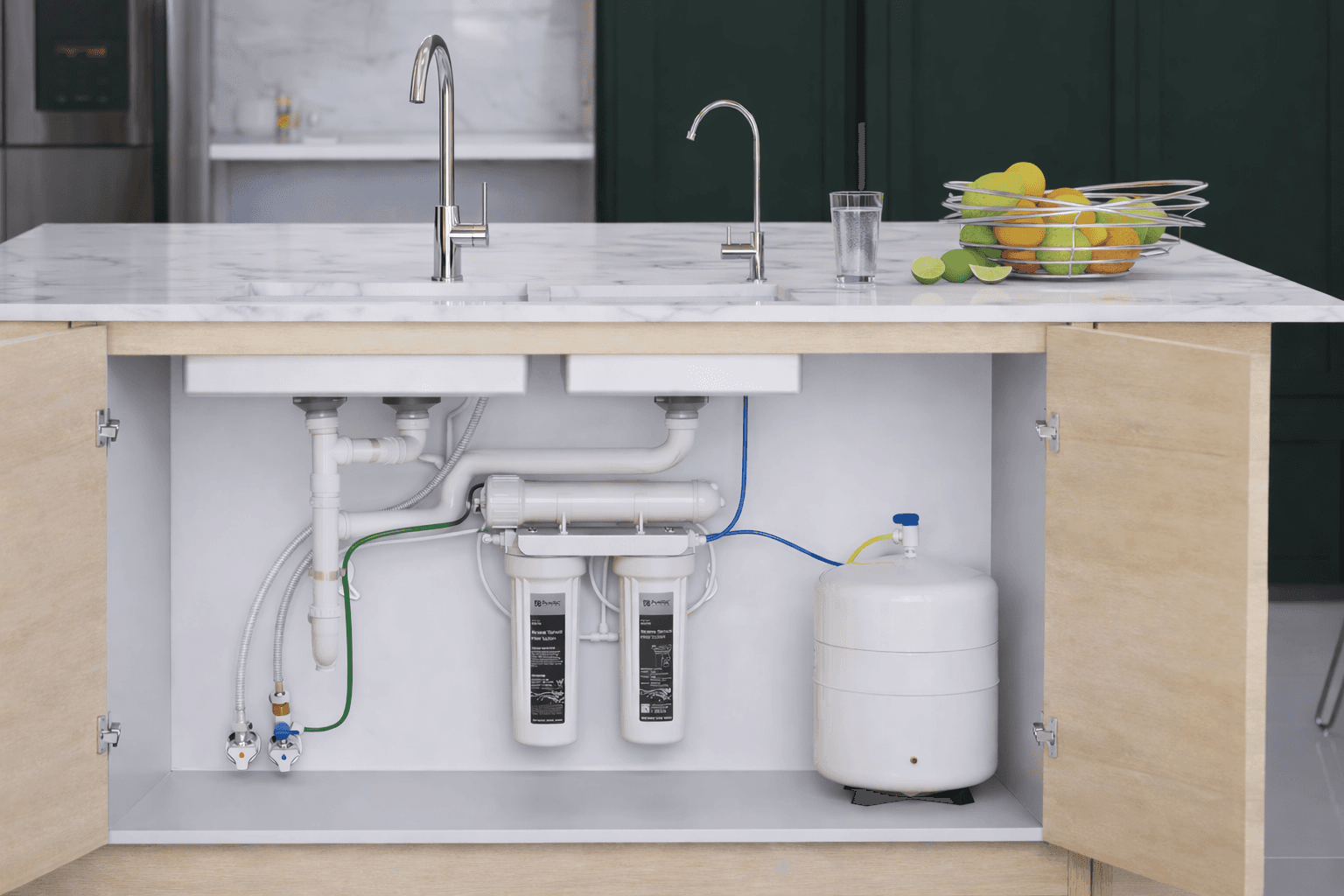
For this reason, many households choose to take an additional step by filtering their drinking water at the point of use. Not because the water system is unsafe — but because filtration allows individuals to add an extra layer of control within their own home.
A properly selected filtration system can help address things such as:
- Chlorine taste or odour
- Sediment or particulates
- Certain trace contaminants depending on filter type
In many ways, it acts as the final step in the multiple-barrier approach, applied within the household itself.
FAQ: Australian Drinking Water Guidelines
What does ADWG stand for?
Australian Drinking Water Guidelines.
Who publishes the ADWG?
The guidelines are developed by the National Health and Medical Research Council (NHMRC) in collaboration with health authorities and water industry experts.
Are water utilities legally required to follow the ADWG?
No. The ADWG itself is not legislation, but it acts as the national benchmark used by regulators and water providers.
Why are they guidelines instead of laws?
Guidelines allow scientific standards to evolve as new research becomes available without requiring constant legislative changes.
How often are the ADWG updated?
Updates occur periodically when new scientific evidence or risk management practices are reviewed.
Do all Australian water utilities use the ADWG?
Yes. The guidelines are widely adopted across all states and territories as the foundation for drinking water management.
Is Australian drinking water safe?
Australia is widely considered to have high-quality drinking water systems, supported by advanced treatment infrastructure and robust monitoring programs guided by the ADWG framework.
Sources
National Health and Medical Research Council (NHMRC) – Australian Drinking Water Guidelines
Australian Government Department of Health – Drinking Water Quality Framework
World Health Organization – Guidelines for Drinking-water Quality
State and Territory Drinking Water Regulators